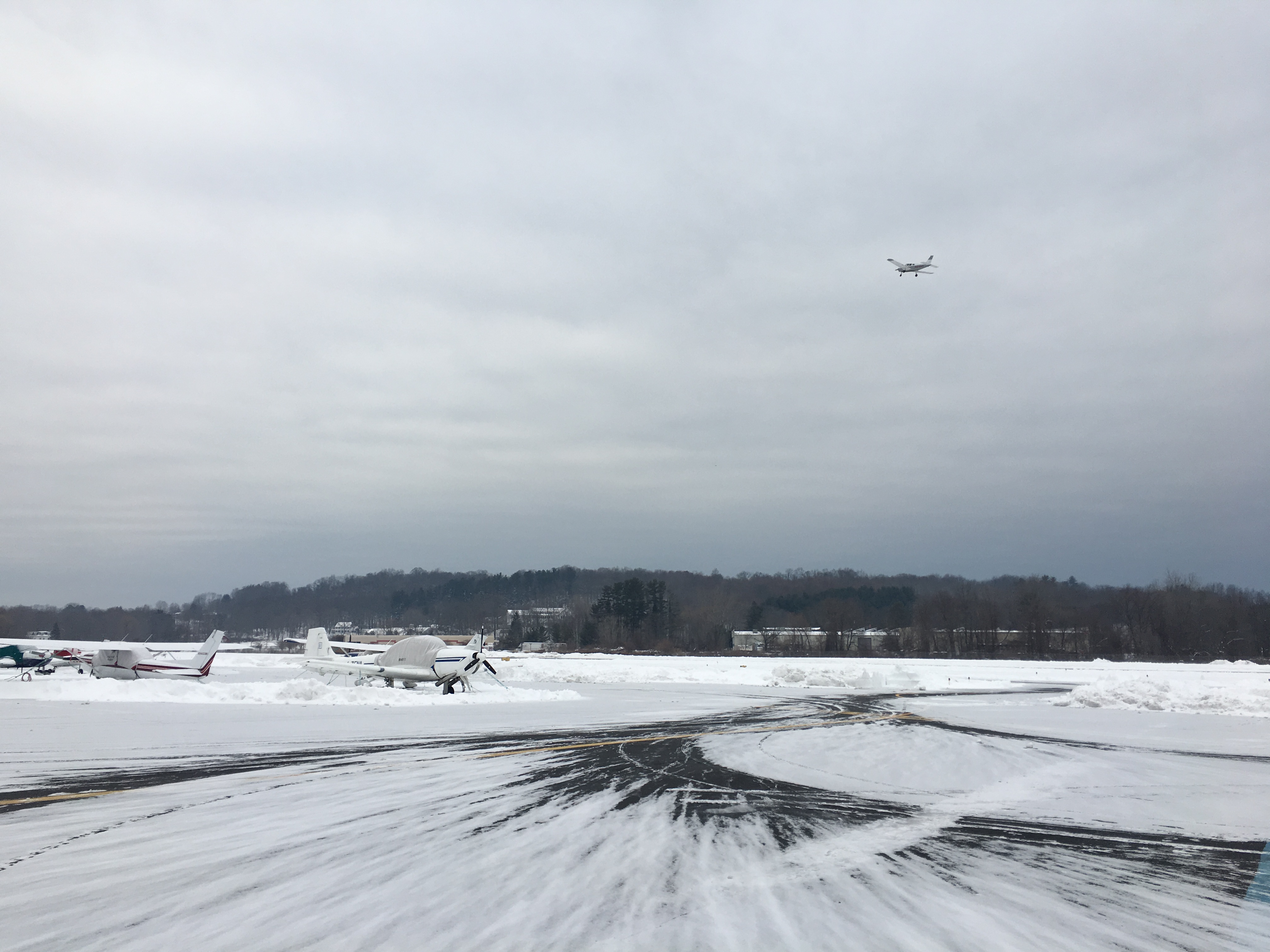
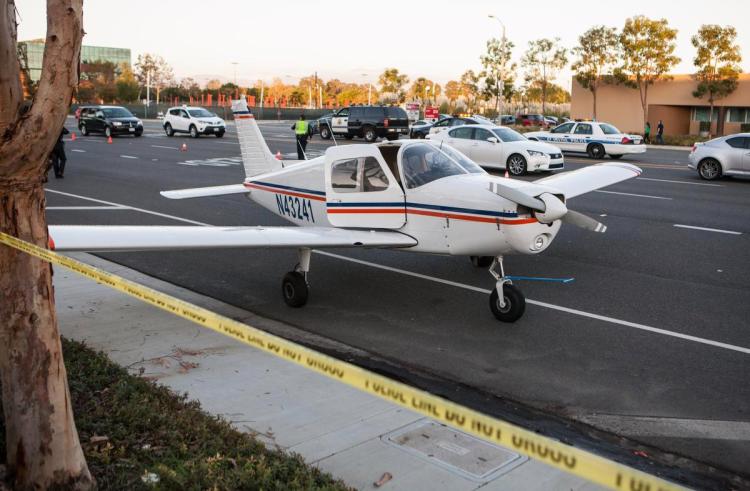
I was nervous about today’s lesson.
After the mistakes I made yesterday, I was hoping for a calm day to just work on my landings. I normally try and schedule my lessons for 8am, before the winds start kicking up. Today I was forced to take a 12pm lesson and the METAR was showing winds out of the north at 8kts gusting to 15kts.
Now, those aren’t particularly strong winds, but when you are a low-time student really trying to focus on the pattern procedural flow and landing timing, anything above dead calm will mean a higher workload. Not only was I not getting the glass smooth day I’d been hoping for, but winds from the north also meant Danbury would be using runway 35.
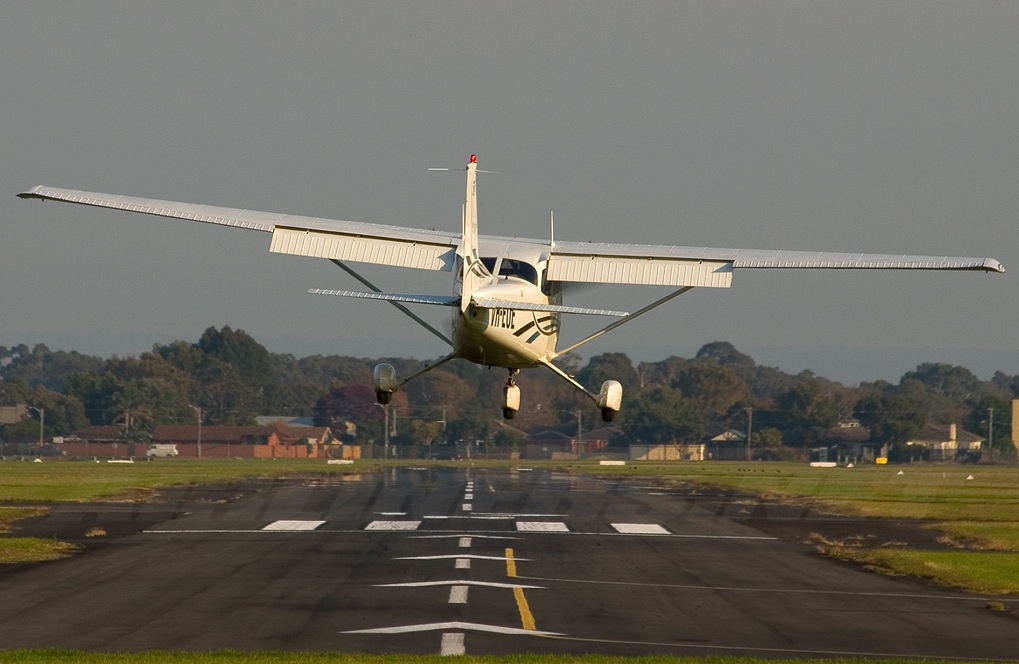
I’ve only flown runway 35 once, and it was before I was doing my own landings. The approach to 35 has a bit of a reputation — due to noise abatement procedures you come in on a rather long final approach which has you flying into a valley between two large hills. According to my CFI, the sun will hit one hill and not the other, causing an updraft on one side and a downdraft on the other and creating a bit of a turbulent vortex in the valley. There is also a pond you fly over right before reaching the runway (you can see it in the below image) which makes its own contribution to the mishmash of air currents during the approach. My instructor claims he knows a couple of commercial-rated pilots who won’t land DXR when 35 is active.
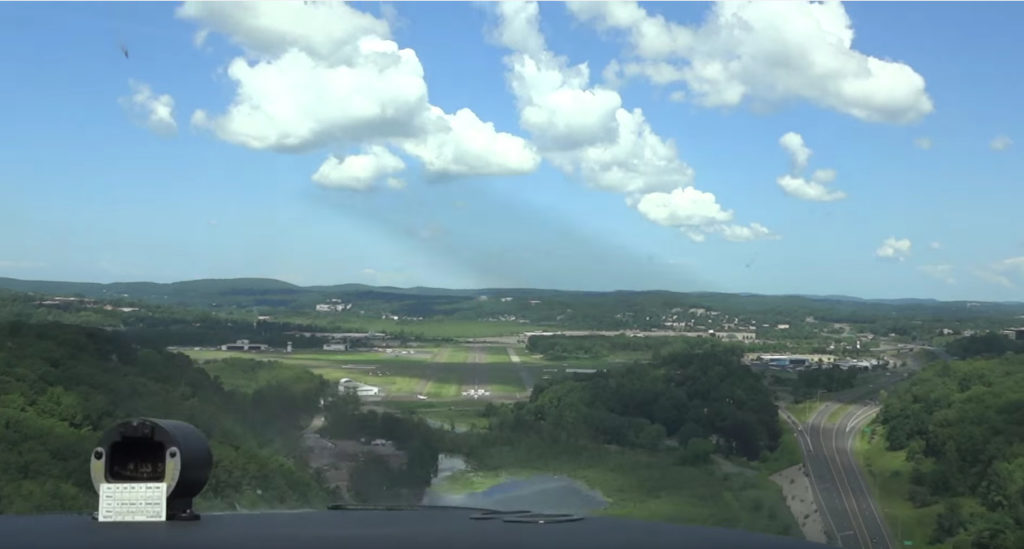
The image above is from a YouTube video showing the approach — there are a few videos like this and watching them will give you a good idea of the terrain involved. The shot above is from after you are already in the valley — you can’t really see the size of the hills to the left and right, but they are intimidating!
I preflighted the plane and met up with my instructor, who laughed and said, “You’ll be having some fun today!”
“I think our definitions of fun are a little different,” I replied.
So, wonderful — a new approach and pattern to learn, and a challenging one at that. I resigned myself to the fact that I’d be working hard today.
After waiting a bit for the line guys to top off our tanks, we started up and taxied out to runway 35. There is a NOTAM for this runway:
ACFT USING RWY 35 ARE NOT VISIBLE FM THE TWR DESCENDING BLO 1300′ ON BASE LEG TIL APCHG 1/2MI FINAL DUE TO NATURAL TERRAIN.
That means we have to keep an eye on traffic in case the tower doesn’t see an approaching aircraft, so when doing the runup we position the plane so we can watch the final approach path.
We took off without incident and my instructor gave me some pointers on where to turn for the pattern. We did a few laps around the airport — it was challenging, as maintaining altitude required constant attention to the throttle. At one point during downwind I was concentrating on maintaining speed, getting my flaps setup, and calling tower, when my instructor asked, “Hey, how are we doing on altitude?” I took a look at the altimeter and realized we were 300 feet above pattern altitude. Whoops!
And that was just downwind. Turning on to final, we battled the updrafts and downdrafts to keep ourselves on a good descent path. The wind was pretty much straight down the runway so I wasn’t battling too much of a crosswind component, but it was still a challenge bringing the plane down at the right rate. I was constantly adding and removing power to try and stay in a stable approach.
I did a few landings — they weren’t great but I felt they are getting ever-so-slightly better. The fifth landing was a bit dicey as the winds starting kicking more and I started getting behind the plane a bit. My instructor called the lesson at that point — he felt it would be unproductive to continue and I would just get overly fatigued. It was about 20 minutes before we would’ve normally stopped the lesson, but I didn’t mind — I had gotten a taste of this interesting and challenging approach and didn’t want to get to the point where I was making stupid mistakes (like yesterday).
One thing I do like about this approach is the long final leg. I felt like it gave me more time to get aligned with the runway and control the descent. I’d like to request this approach one day when winds are calm so I can get some more experience flying it without battling the crazy wind.
And there’s the rub, right? I know to be a pilot I will need to be prepared for any situation — the winds won’t always be calm, the conditions will not be perfect, and I’m still going to have to get the plane down safely. I understand the experience I gained yesterday and today is very valuable — but at the same time, it is frustrating since I’m trying to perfect my landings. I just want some time to work on final approach, roundout, and flaring with as few distractions as possible. Once I have a comfort level landing in calm conditions, I will welcome the challenge of upping the difficulty and tackling winds and thermals. Right now, though, it is a bit overwhelming.
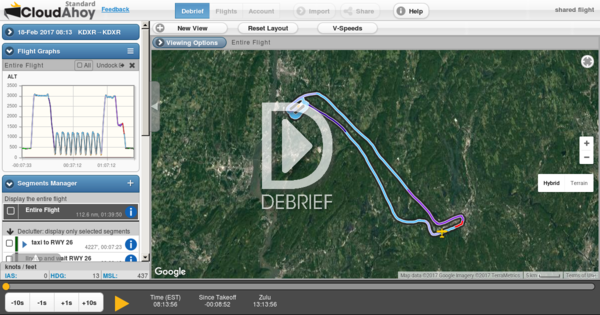
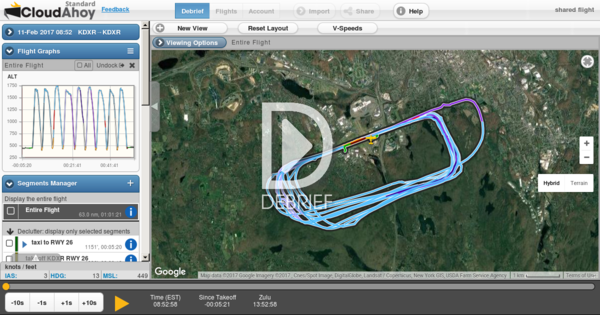
I was able to record today’s flight with CloudAhoy — click the picture below to check it out. Note the elongated pattern due to the extended downwind to avoid overflying the Lake Waubeeka community (which has a bit of an interesting history) on base.
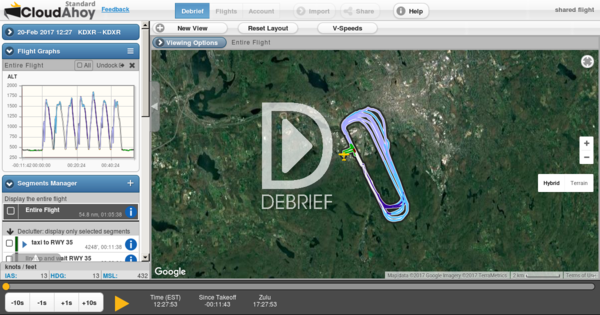
I’ll be doing some pattern work in my home simulator during the upcoming week… it won’t help me with getting the feel of the plane down, but it might help me manage cockpit workflow a little better.
Flight time today: 1.0 hours
Total flight time to date: 23.8 hours
Total takeoffs to date: 64
Total landings to date: 60